Coaster Techniques
How to Block Crochet Coasters So They Lie Flat
Blocking shapes a finished coaster with water or steam so it dries flat and to size. Here are three methods, how to pin rounds and squares, and what blocking cannot fix.
Crochet coaster patterns and techniques
The know-how behind every coaster: yarn and hook choice, sizing, shaping, color changes, edging, blocking, and finishing.
8 tutorials published
Blocking shapes a finished coaster with water or steam so it dries flat and to size. Here are three methods, how to pin rounds and squares, and what blocking cannot fix.
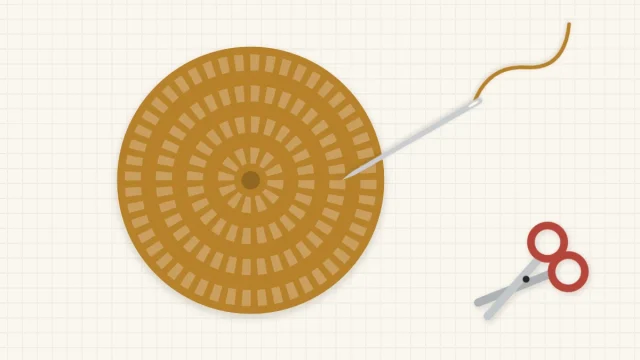
How to finish a crochet coaster so it stays finished: tails long enough to weave, three changes of direction on the back, and an invisible join on the last round.
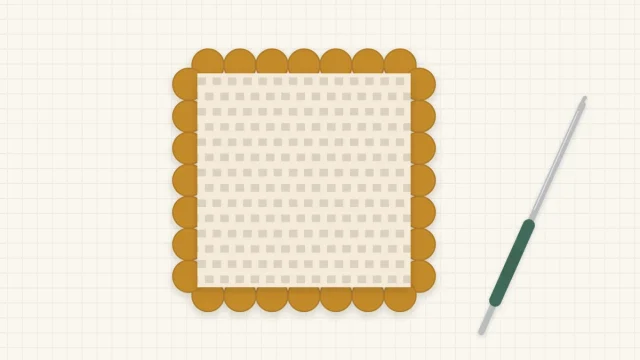
Four simple borders for crochet coasters, with exact stitch counts: single crochet, crab stitch, picot and shell. Includes how to turn corners and adjust the multiple.
A clean color change comes down to one rule: finish the last yarn over of the previous stitch with the new color. Here is how it works in rows, rounds and stripes.
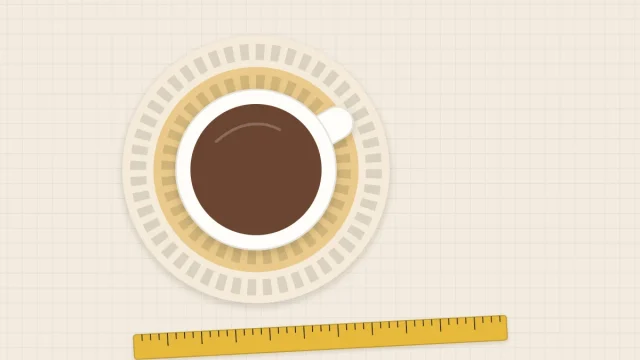
Most crochet coasters are about 4 to 4.5 in across, but the right size depends on your cups. Learn how to measure, how much margin to add and how to adjust any pattern.
Cupping means a round has too few stitches and ruffling means it has too many. Learn the circle math for each stitch height and how to diagnose and fix both problems.
Coasters work best in a dense fabric, which usually means a hook one size smaller than the yarn label suggests. Here is how to choose a size and test it with a swatch.
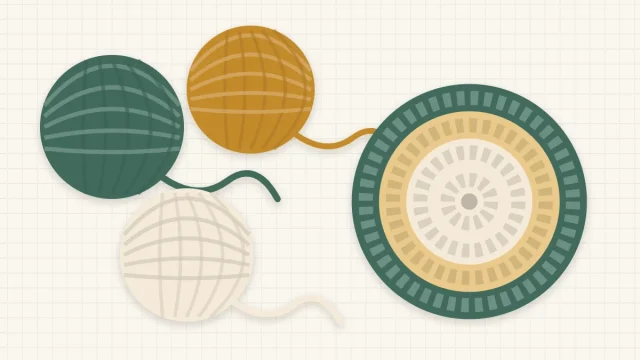
Cotton is the usual pick for crochet coasters, but blends, yarn weight and finish all change the result. Here is how to choose a yarn and estimate how much to buy.