How to Block Crochet Coasters So They Lie Flat
Blocking shapes a finished coaster with water or steam so it dries flat and to size. Here are three methods, how to pin rounds and squares, and what blocking cannot fix.
Pattern at a glance
Materials
- Blocking mat or foam tiles, ideally gridded
- Rust-proof pins
- Spray bottle or basin of water
- Clean towel
- Tape measure or ruler
A coaster that curls at the edge or comes out slightly lopsided is often one damp afternoon away from lying flat. Blocking means wetting or steaming finished crochet, shaping it to the measurements you want, and leaving it to dry in that shape. For cotton coasters it is quick, forgiving and needs very little equipment.
What You Need
- A blocking mat or interlocking foam tiles. A gridded mat makes measuring easier, and a folded towel on a surface you can pin into also works.
- Rust-proof pins, so they do not mark damp yarn.
- A spray bottle or a basin of water.
- A clean towel.
- A tape measure or ruler.
Weave in your yarn tails before you start, so they set in place along with the stitches. If you have not done that yet, the guide to finishing crochet coasters shows how. Check the yarn label too. Its care symbols tell you what water temperature and how much heat the fiber is meant to take.
Wet Blocking: The Most Thorough Method
Wet blocking soaks the fibers completely, which gives you the most control over the final shape. It suits cotton well and is the method to choose for a stubborn curl.
- Soak the coaster in cool or lukewarm water for a few minutes, until it is wet all the way through.
- Lift it out and press the water out gently. Do not wring or twist it.
- Roll it in a towel and press down to remove more water. It should be damp, not dripping.
- Lay it on the mat, pat it into shape and pin it to your target measurement.
- Leave it pinned until it is completely dry.
Spray Blocking: Quick and Gentle
For a coaster that only needs a little persuasion, pin it dry first, then mist it with water until it is evenly damp. Press it lightly with your palm so the moisture works into the stitches, and leave it to dry. Spray blocking takes less time than a full soak, and it is a gentler option when you are unsure how a yarn will react to being submerged.
Steam Blocking, With Caution
Steam relaxes fibers fast. Pin the dry coaster to shape, then hold a steam iron or garment steamer an inch or two (2.5 to 5 cm) above the surface and let the steam pass through the fabric. Do not press down. Let the coaster cool and dry fully before you take out the pins.
Watch out
Never touch an iron to acrylic or other synthetic yarn. Direct heat can flatten the stitches permanently, and that cannot be undone. Follow the yarn label: if it says do not iron, use spray blocking instead. Keep your fingers clear of the steam.
Pinning Rounds and Squares to Measurement
Decide on the finished size before you pin, and use the grid on the mat or a ruler to hold yourself to it.
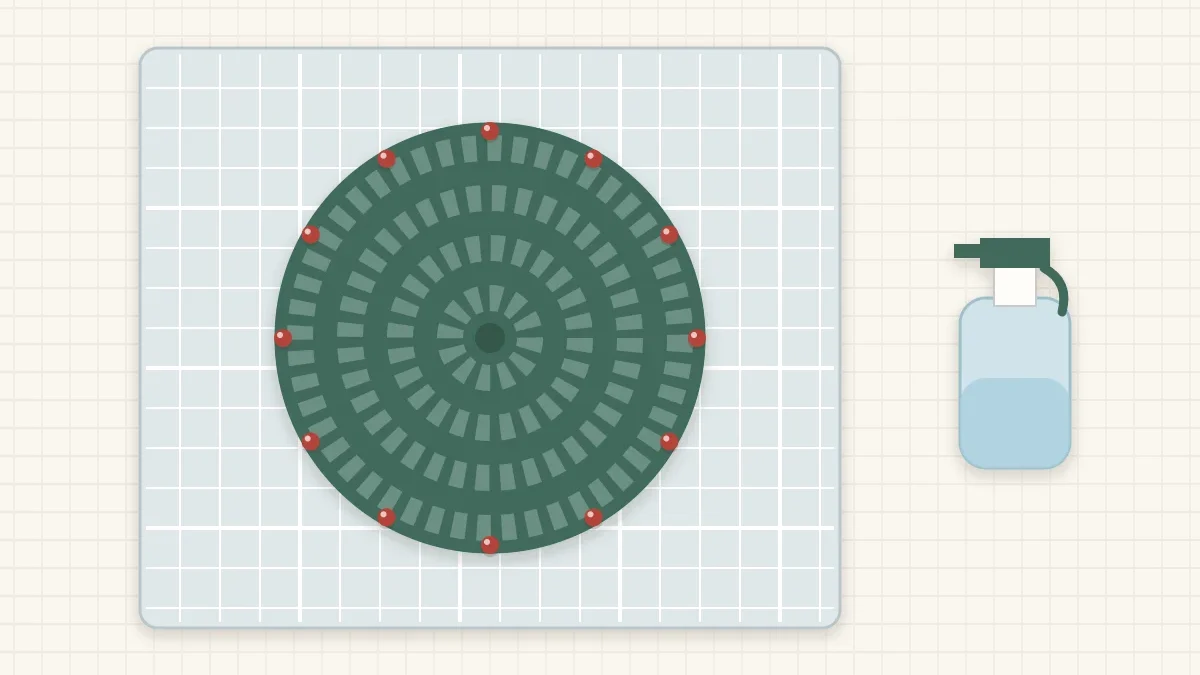
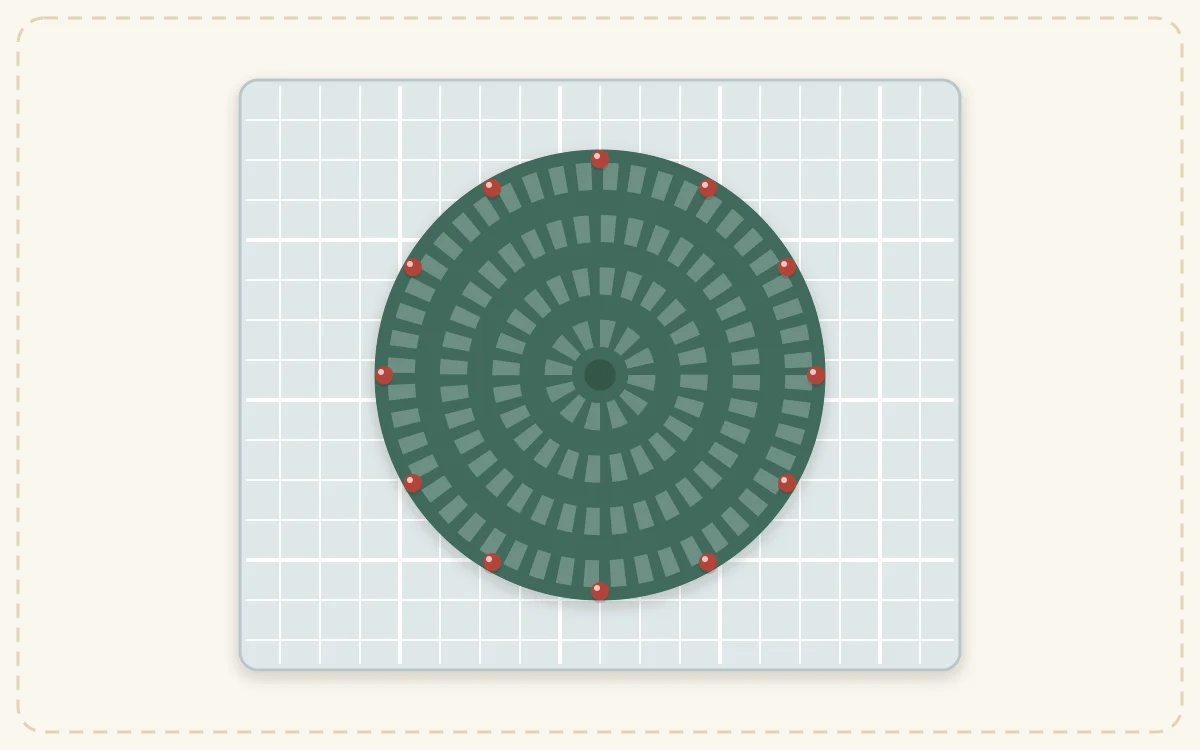
For a round coaster: place the center of the coaster on a grid intersection. Pin the edge at four points first, at the top, bottom, left and right, each the same distance from the center. Then add pins halfway between those, and again between those if needed, until the edge is an even circle. Eight to twelve pins is usually enough for a coaster of about 4 in (10 cm). On a scalloped or picot edge, put one pin in each scallop or point.
For a square coaster: pin the four corners first, lining them up on the grid so all four sides are the same length. Then pin along each side, about every inch (2.5 cm). Too few pins let the edge dip between them and dry into shallow curves. If you have no grid, measure both diagonals. When they match, the square is true.
Angle each pin slightly outward, away from the coaster, so the fabric does not slide up the shaft. Stretch only as far as the measurement asks. Pulling harder opens gaps between the stitches and can distort the shape once the pins come out.
Drying Time
Leave the coaster pinned until it is dry to the touch all the way through, including the thicker center. Cotton holds a good deal of water, so a wet-blocked coaster may need several hours or overnight, depending on how thick it is and how warm and airy the room is. Spray-blocked and steamed coasters are usually ready sooner. A spot with moving air helps. Taking the pins out while the yarn is still damp is the most common reason blocking does not hold.
What Blocking Can and Cannot Fix
Blocking is a finishing step, not a repair for shaping mistakes. It helps to know which problems belong to which category.
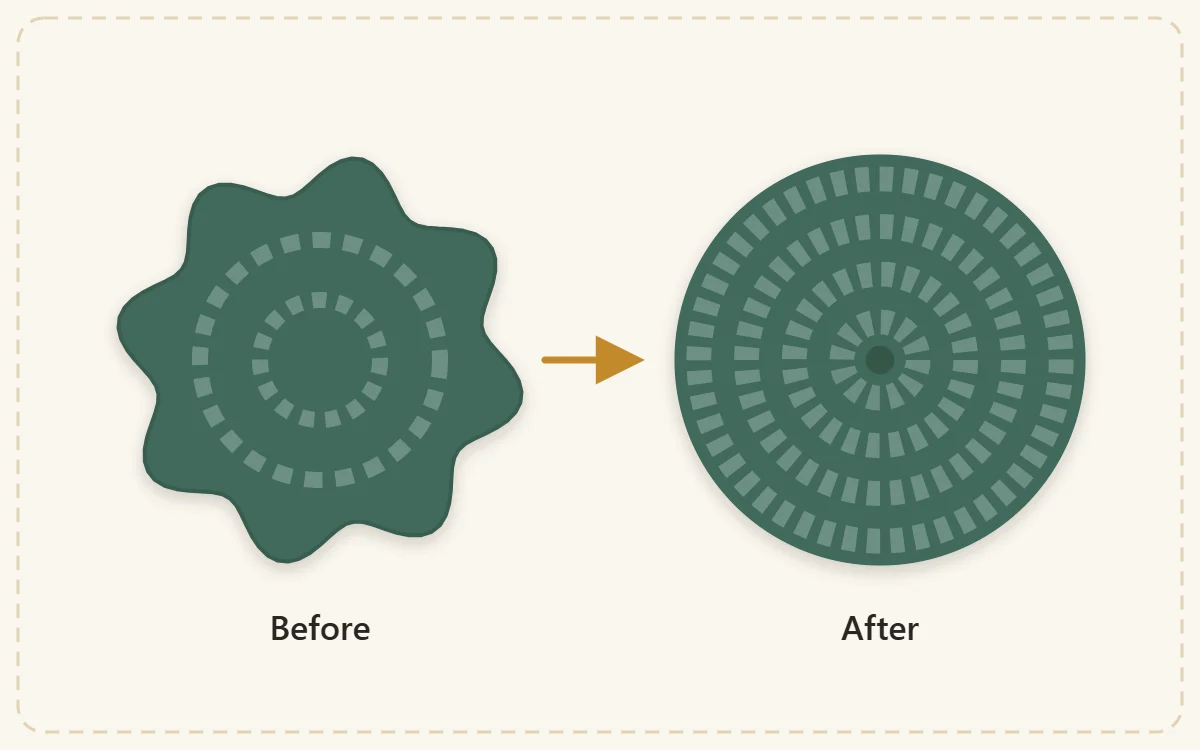
Blocking generally can:
- Flatten an edge that curls slightly.
- Even out an outline that is a little wobbly.
- Square up corners and straighten sides.
- Open up petals, shells and picots so they show clearly.
- Bring coasters that differ by a small amount to the same size.
Blocking generally cannot:
- Flatten a circle that has cupped into a bowl or ruffled into deep waves. That comes from the number of increases, and the fix is in the stitch count. See how to keep crochet coasters flat.
- Hide missing or extra stitches along an edge.
- Make a coaster dramatically larger or smaller.
- Last forever. After washing, reshape the coaster while it is damp and dry it flat.
Fiber makes a difference as well. Cotton and other plant fibers tend to take a block readily. Acrylic often springs back after wet or spray blocking, so expect a more modest result.
Blocking a Whole Set at Once
If you are making a matching coaster set, block all of the coasters in one session and to the same measurement. Pin the first one, note the grid lines it reaches, and pin the others to the same lines. Small gauge differences from one coaster to the next disappear, and the set stacks neatly. For edges that need extra care, such as the shells on a scalloped round coaster, count the scallops and use the same number of pins on every piece so the points dry in matching positions.
Frequently asked questions
Do cotton coasters really need blocking?
Not always. A coaster that already lies flat and measures what you want can be used as it is. Blocking helps most with slight curling, uneven edges and matching the sizes in a set.
Can I block crochet coasters without a blocking mat?
Yes. A folded towel on a surface that takes pins, such as a foam tile or an ironing board, works. Use a ruler to check the measurements in place of a grid.
Why did my coaster curl again after blocking?
It may have been unpinned while still damp, or the curl comes from the stitch count instead of the finish. A circle with too few increases will cup again however carefully it is blocked.