How to Crochet a Matching Coaster Set of Four or Six
How to make four or six coasters that actually match: a reference coaster, consistent size, a simple color plan, yarn estimated by weight and blocking as a set.
Pattern at a glance
Materials
- Worsted weight (#4) cotton yarn from one dye lot per color
- One crochet hook used for the whole set
- Tape measure or ruler
- Kitchen scale for estimating yarn
- Blocking mat and pins
- Yarn needle
- Scissors
One coaster is a quick project. A set is a consistency exercise: the pattern is the same, but now four or six pieces have to match in size, thickness and color well enough to stack neatly and look like they belong together. Most of that comes down to a handful of decisions you make before the second coaster, not to extra skill.
Start with a Reference Coaster
Make one coaster completely, including the border, the woven ends and the blocking. This first piece is your reference. Measure it across the middle in two directions, write the numbers down, and note the hook size and how many rounds or rows you worked. Every later coaster gets compared with this one, not with the pattern’s stated size, because the pattern’s size was reached with somebody else’s gauge.
Choose a pattern you are happy to repeat. A plain shape such as the classic round double crochet coaster is a good base for a set because it has only four rounds and clear stitch counts to check. If you are unsure how big to go, the coaster size guide shows how to measure your own mugs and glasses first.
Keeping the Size Consistent
Coasters from the same pattern drift apart for a few predictable reasons. Remove them one at a time.
- Same yarn, same lot. Buy all the yarn for the set at once and check that the dye lot numbers on the ball bands match. Different lots of one color can differ slightly in shade, and different yarns of the same weight category can work up to different sizes.
- Same hook. Use the same physical hook for the whole set. Two hooks marked 5 mm can produce slightly different stitches if their heads are shaped differently.
- Same counts. Count the stitches at the end of every round or row on every coaster. A single missed increase makes a piece that will not match however carefully you block it.
- Same conditions. Gauge tends to tighten when you are tense or rushing and loosen when you are relaxed. Working the set over a few similar sittings helps.
- Measure against the first. Lay each new coaster on the reference coaster before you fasten off. If the edges do not line up, it is far easier to redo one round now than to notice the difference later.
Watch out
Compare like with like. An unblocked coaster will usually look smaller and less even than your blocked reference. A difference of a stitch width tends to block out; a difference of a whole round does not.
Planning the Colors
There are four straightforward ways to color a set. All of them work with any pattern on this site.
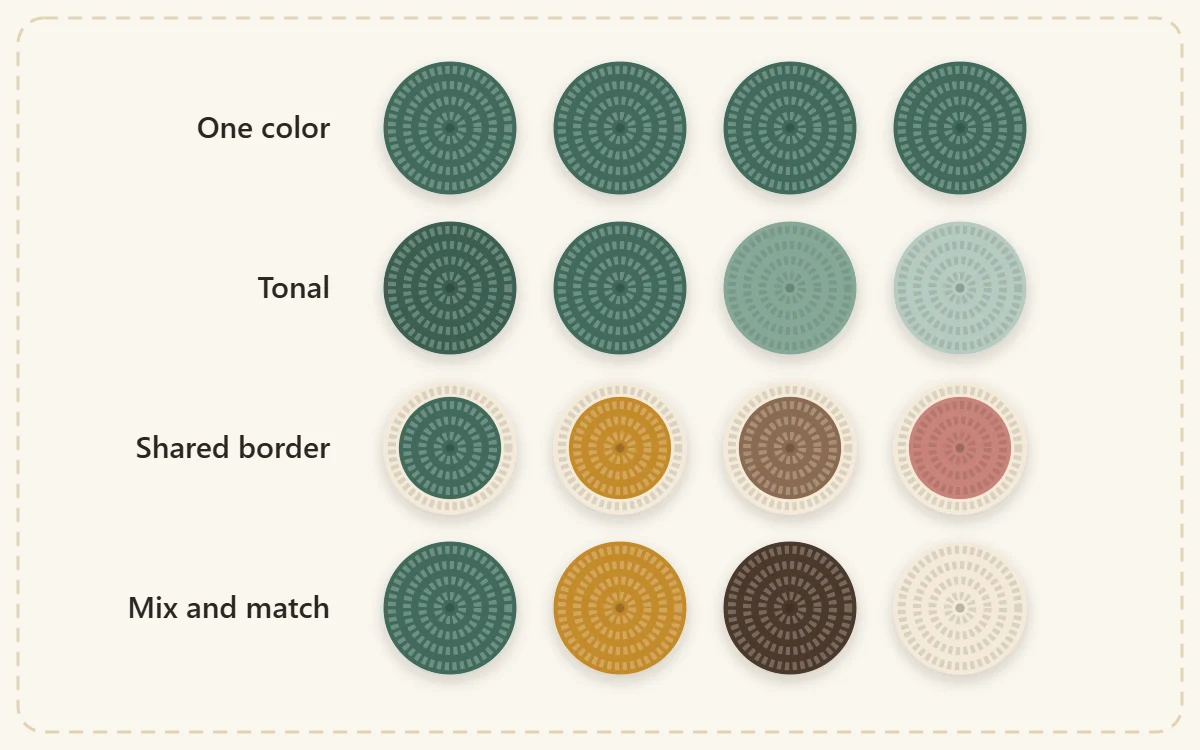
| Scheme | How it works | Good to know |
|---|---|---|
| One color | Every coaster is identical. | The simplest to plan and the easiest to replace if one goes missing. |
| Tonal | Each coaster is a lighter or darker shade of one color family. | Looks deliberate and lets people tell their drinks apart. |
| Shared border | Each coaster has a different main color and the same border color. | The border ties unrelated colors together. |
| Mix and match | A small palette is rotated so each coaster uses the colors in a different order. | Needs the most planning; write the order down before you start. |
Whichever scheme you choose, keep every yarn the same weight and fiber. Mixing a cotton with an acrylic of the same weight category often gives coasters of different size and feel, even with identical stitch counts. For multi-color sets, limit the palette to three or four colors so the set reads as one group.
Estimating Yarn by Weighing the First Coaster
Yarn amounts in patterns are estimates, and your gauge may use more or less. A kitchen scale gives you a number based on your own work.
- Weigh the finished reference coaster in grams.
- Multiply by the number of coasters in the set.
- Add a cushion of roughly a fifth for tails, swatches and the occasional restart.
- Compare the total with the weight printed on the ball band to see how many balls you need.
For a multi-color coaster, weigh each ball before and after you use it on the reference coaster. The difference is what one coaster takes of that color. If the band lists both weight and length, you can turn grams into yards or meters with the same ratio.
A Batch Workflow That Keeps You Honest
After the reference coaster is finished, working the rest in stages rather than one by one tends to produce a more even set, because you repeat the same motion while your hands remember it.
- Work the first round or two of every remaining coaster.
- Work the next rounds on each one, checking the stitch count every time.
- Compare each piece with the reference before the final round.
- Add borders to all of them in one sitting so the edge gauge matches.
- Weave in all the ends, then block.
Keep a small card with the pattern’s stitch counts and tick each coaster off as it passes each stage. If working in stages feels tedious, make the coasters one at a time instead, but still add all the borders together.
Blocking as a Set
Blocking is where small differences get evened out. Dampen all the coasters the same way, then pin or pat each one to the measurement you wrote down for the reference coaster, not to whatever shape it wants to take. A gridded mat or a paper template drawn at the target size makes this quick. Let them dry fully before you move them. The full method is in how to block crochet coasters.
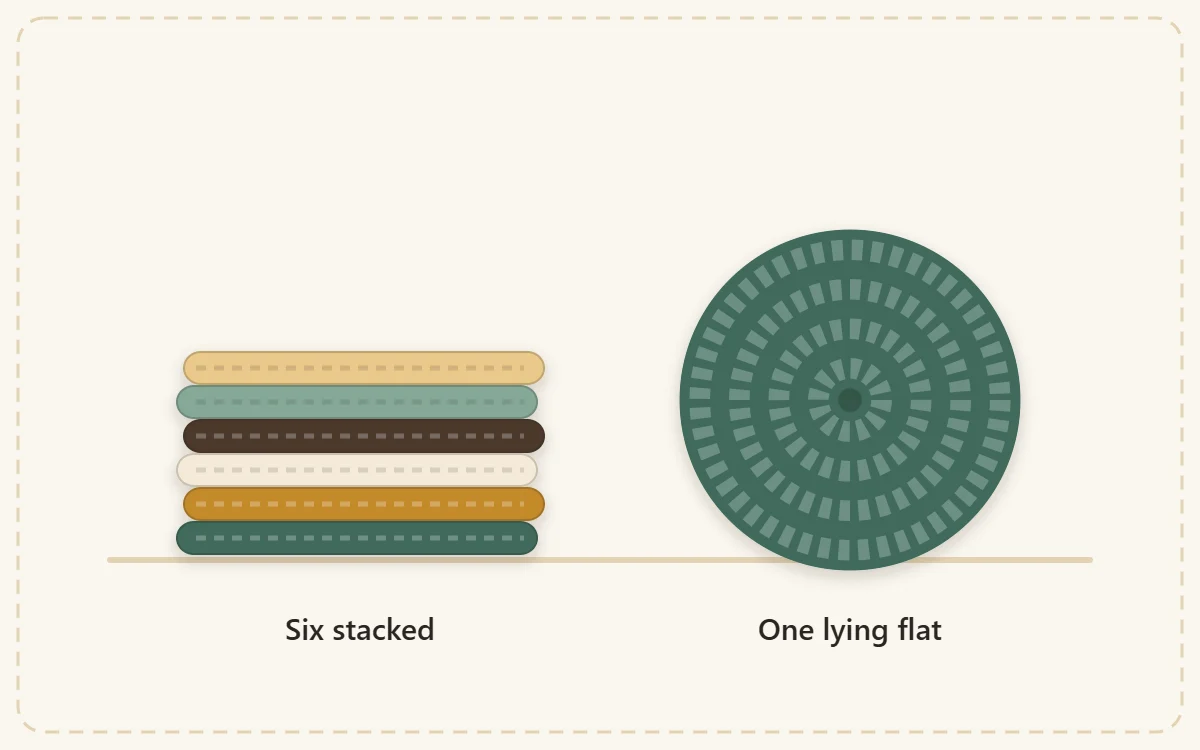
When they are dry, stack them. A stack shows what a row on the table hides: edges that stick out, one piece that is thicker than the others, a coaster that rocks instead of lying flat.
Four or Six?
Four suits most households and is a comfortable amount of repetition. Six is useful if you often have guests and makes a more generous gift. In either case, consider making one extra. It costs little more yarn, it covers you if one piece turns out noticeably off, and a spare is welcome when a coaster is in the wash.
A finished set also needs somewhere to live. A simple crocheted coaster holder made in one of the set’s colors keeps the stack together on the table.
Frequently asked questions
Why are my coasters different sizes when I used the same pattern?
Usually because of a change in gauge, a different hook or yarn lot, or a miscounted round. Count every round and lay each coaster on the first one before fastening off.
How much yarn do I need for a set of six coasters?
It depends on your pattern and gauge. Weigh one finished coaster, multiply by six, add a cushion of about a fifth and compare the total with the weight on the ball band.
Should every coaster in a set be the same color?
No. One color is the simplest, but tonal shades, a shared border color or a rotated palette all work, provided the yarns share the same weight and fiber.