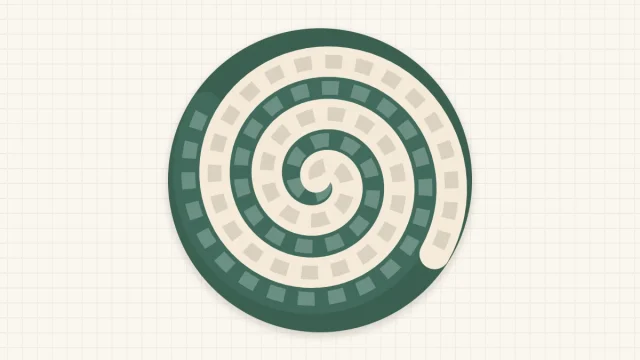
Textured Crochet Coaster with Raised Post Stitches
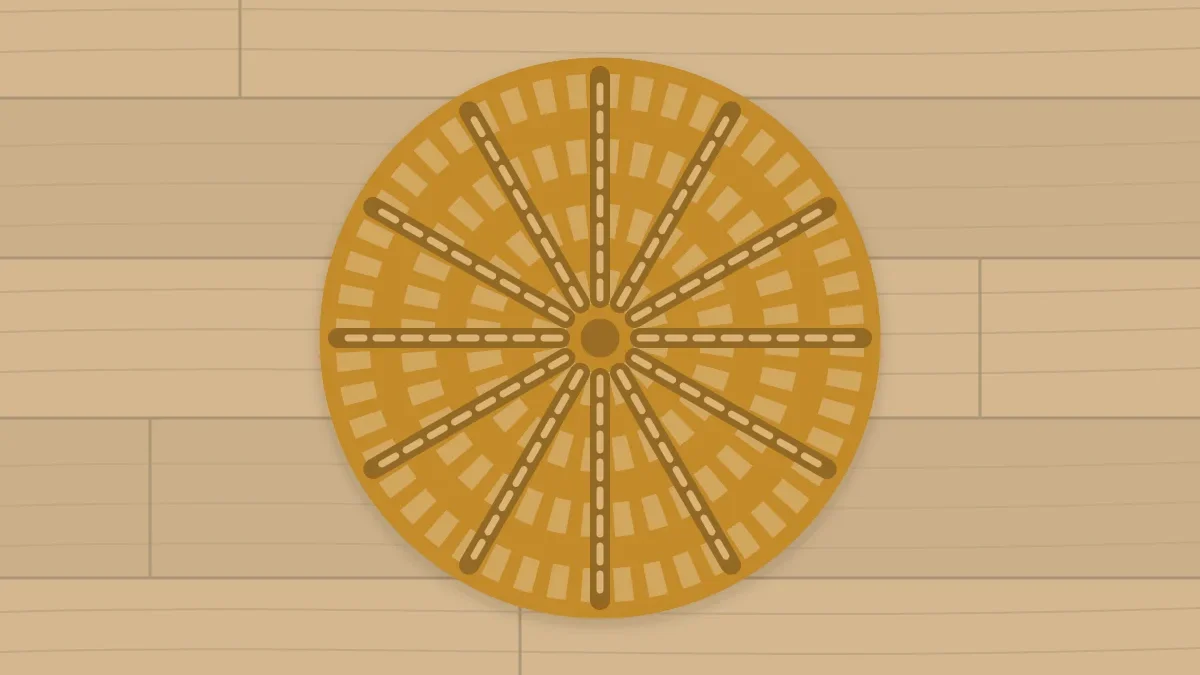
A round double crochet coaster with twelve raised spokes made from front post double crochet. Includes how to work the post stitch and exact counts for all five rounds.
Pattern at a glance
Materials
- Worsted weight (#4) cotton yarn, one color
- Yarn needle
- Scissors
Post stitches are the simplest way to add real texture to a round coaster. Instead of working into the top of a stitch, you work around its post, and the stitch stands up from the fabric as a ridge. Stack one post stitch on another, round after round, and you get twelve raised spokes running from the center to the edge.
The coaster underneath is an ordinary double crochet circle of 12, 24, 36 and 48 stitches, so if you have made a classic round crochet coaster, the shaping will feel familiar. This pattern uses US crochet terms throughout.
What You Need
- Worsted weight (#4) cotton yarn, one color
- US H-8 (5 mm) hook
- Yarn needle and scissors
A solid, light or mid-tone color shows the ridges best. Dark or variegated yarn tends to hide them. The finished coaster measures about 4.25 in (11 cm) across, though your size depends on your gauge.
How to Work a Front Post Double Crochet
The post is the upright body of a stitch, below the two loops at the top. A front post double crochet is a normal double crochet that goes around that post from the front.
- Yarn over.
- Insert the hook from the front of the work to the back on the right of the post, then bring it forward again on the left, so the post lies across the front of the hook. Left-handed crocheters go in on the left and come out on the right.
- Yarn over and pull up a loop around the post. You have three loops on the hook.
- Yarn over and pull through two loops, then yarn over and pull through the last two.
Pull that first loop up to the height of the stitches beside it. A loop left short makes a squat post stitch that pulls the round in and can make the coaster cup.
Abbreviations
- ch = chain
- sl st = slip stitch
- sc = single crochet
- dc = double crochet
- FPdc = front post double crochet
- st(s) = stitch(es)
Textured Coaster Pattern
The coaster is worked in joined rounds with the right side always facing you. The chain 2 at the start of rounds 1 to 4 does not count as a stitch: never work into it, and always join to the first real stitch of the round.
- Round 1: Make a magic ring. Ch 2, 12 dc in the ring. Pull the tail to close the ring and join with a sl st in the first dc. (12 dc)
- Round 2: Ch 2. Starting in the same stitch as the join, (dc in the top of the next st, FPdc around the post of that same st) 12 times. Join with a sl st in the first dc. (12 dc and 12 FPdc; 24 sts)
- Round 3: Ch 2. Starting in the same stitch as the join, (2 dc in next dc, FPdc around next FPdc) 12 times. Join with a sl st in the first dc. (24 dc and 12 FPdc; 36 sts)
- Round 4: Ch 2. Starting in the same stitch as the join, (2 dc in next dc, dc in next dc, FPdc around next FPdc) 12 times. Join with a sl st in the first dc. (36 dc and 12 FPdc; 48 sts)
- Round 5: Ch 1 (does not count as a stitch). Starting in the same stitch as the join, sc in each st around, working into the top loops of the post stitches as usual. Join with a sl st in the first sc. (48 sc)
Fasten off and weave in both tails on the wrong side.
Where the Spokes Come From
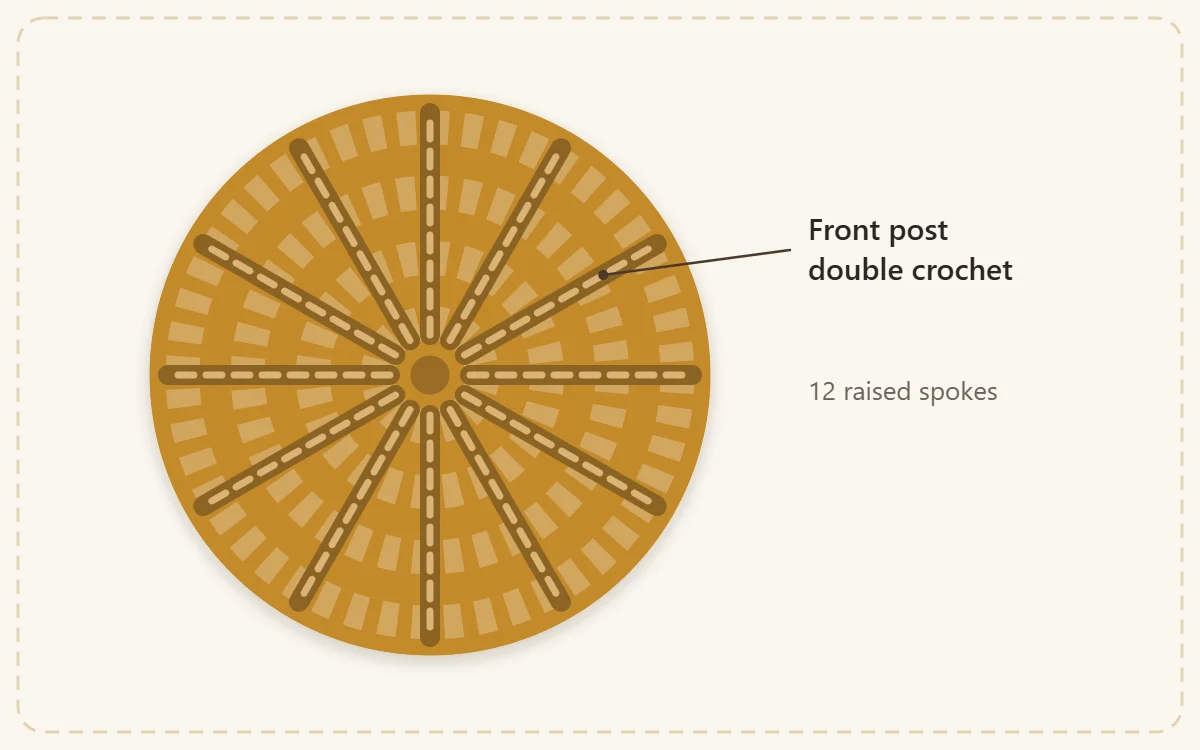
Round 2 sets everything up. Each of the twelve stitches in round 1 receives two stitches: a plain double crochet in its top and a post stitch around its body. That doubles the count to 24, exactly as a plain circle would, and creates twelve post stitches spaced evenly around.
From then on, every post stitch is worked around the post stitch below it, which keeps each spoke in a straight line. All the increases happen in the plain stitches between the spokes: one double crochet between spokes in round 2, two in round 3, three in round 4. The spoke itself never increases, so it stays narrow and crisp.
When you work around a post, the top of that stitch is left unused and sits just behind your new stitch. That is correct. Do not go back and work into it, or the round will gain twelve stitches it should not have.
Counting a Round With Post Stitches
The most common slip in this pattern is working into the hidden top of a post stitch by accident, or skipping the plain stitch right after one because the ridge leans over it. A quick check after each round saves ripping back later.
- Count the spokes first. There should be twelve in every round from round 2 on.
- Then count the plain stitches in one gap between spokes: one after round 2, two after round 3, three after round 4.
- If one gap is short, look right beside the previous ridge, where the first plain stitch likes to hide.
Watch out
Post stitches draw the fabric in slightly. If your coaster starts to form a shallow bowl, check that you are pulling each post loop up to full height before you change anything else.
If it still cups after that, the cause is more likely general gauge than the spokes. The guide to keeping crochet coasters flat walks through the fixes.
Finishing and Using a Ridged Coaster
Blocking makes a visible difference here, because it relaxes the pull of the spokes and opens the circle out. Pin the coaster right side up to its full width, without flattening the ridges under anything heavy, and let it dry completely. The method is covered in how to block crochet coasters.
Be realistic about the surface: this coaster is not perfectly level. The spokes are low and evenly spaced, so a mug or a wide tumbler rests across several of them at once. A narrow-based or stemmed glass has less to stand on, so try your own glasses on the finished coaster before you rely on it.
Simple Ways to Vary It
- Contrast edge: work round 5 in a second color to frame the spokes.
- Denser fabric: use a US G-6 (4 mm) hook. The coaster will come out smaller and stiffer.
A stack of four of these, each in a different color, makes a tidy present. The guide to putting together a crochet coaster gift set covers bundling and what to write on a care tag.
Frequently asked questions
What is the difference between a front post and a regular double crochet?
A regular double crochet goes under the two loops at the top of a stitch. A front post double crochet goes around the upright body of the stitch from the front, which pushes it forward as a ridge.
Do I work into the top of a stitch after making a post stitch around it?
Not in rounds 3 and 4. The top of the post stitch below stays unused behind the new post stitch. Only round 2 puts a plain stitch and a post stitch on the same stitch.
Will a glass sit steadily on a coaster with raised spokes?
A mug or wide tumbler rests across several spokes at once. Narrow or stemmed glasses have less to stand on, so test yours on the finished coaster first.